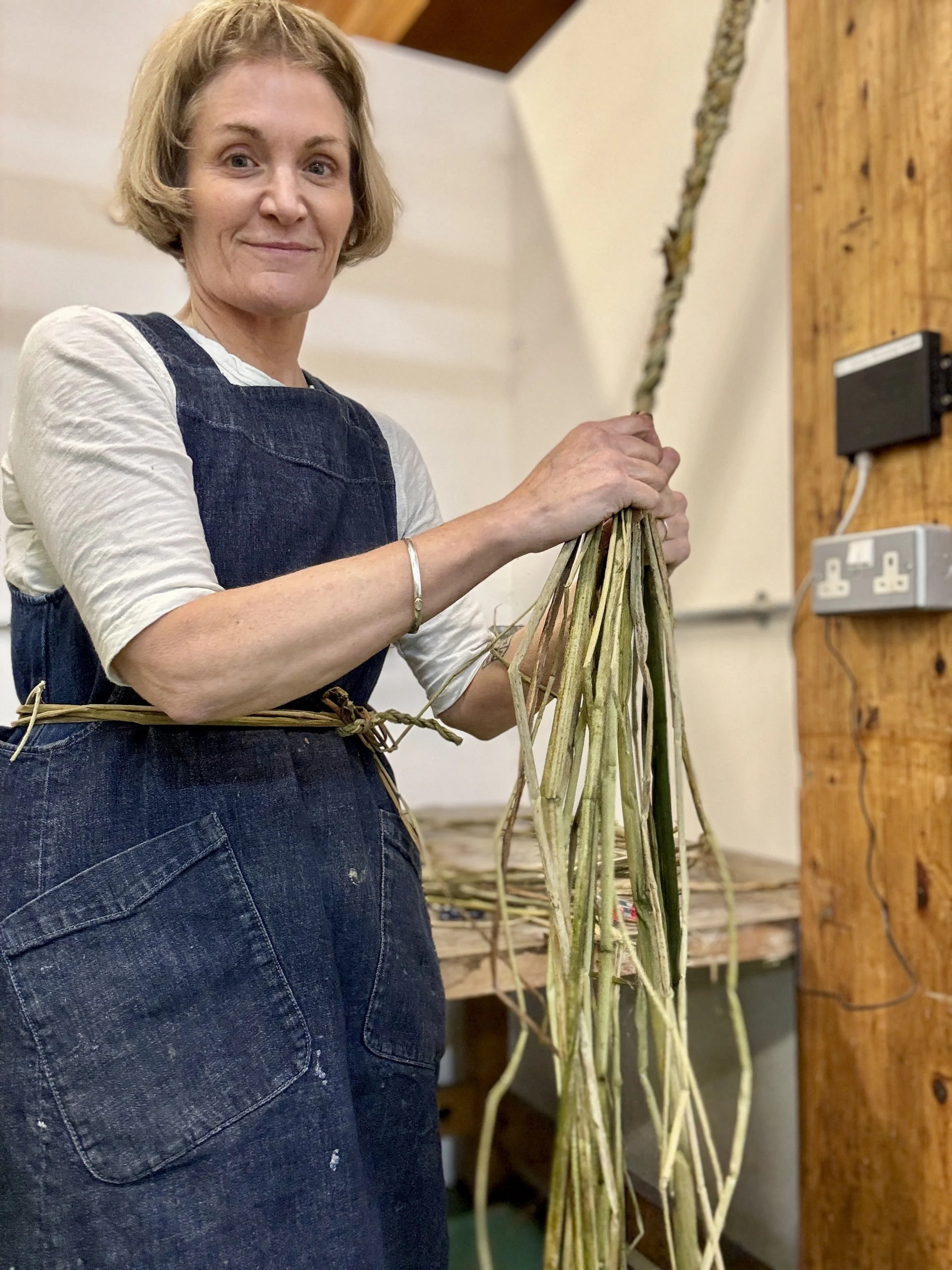
la Escuela Artesana x Fleur Emery-Rice
example courses
01 / introduction to english rush weaving
Summary
Discover the ancient craft of English rush weaving and work with Scirpus Lacustris, a remarkable natural material that has been harvested by hand from Britain’s rivers and wetlands for centuries.
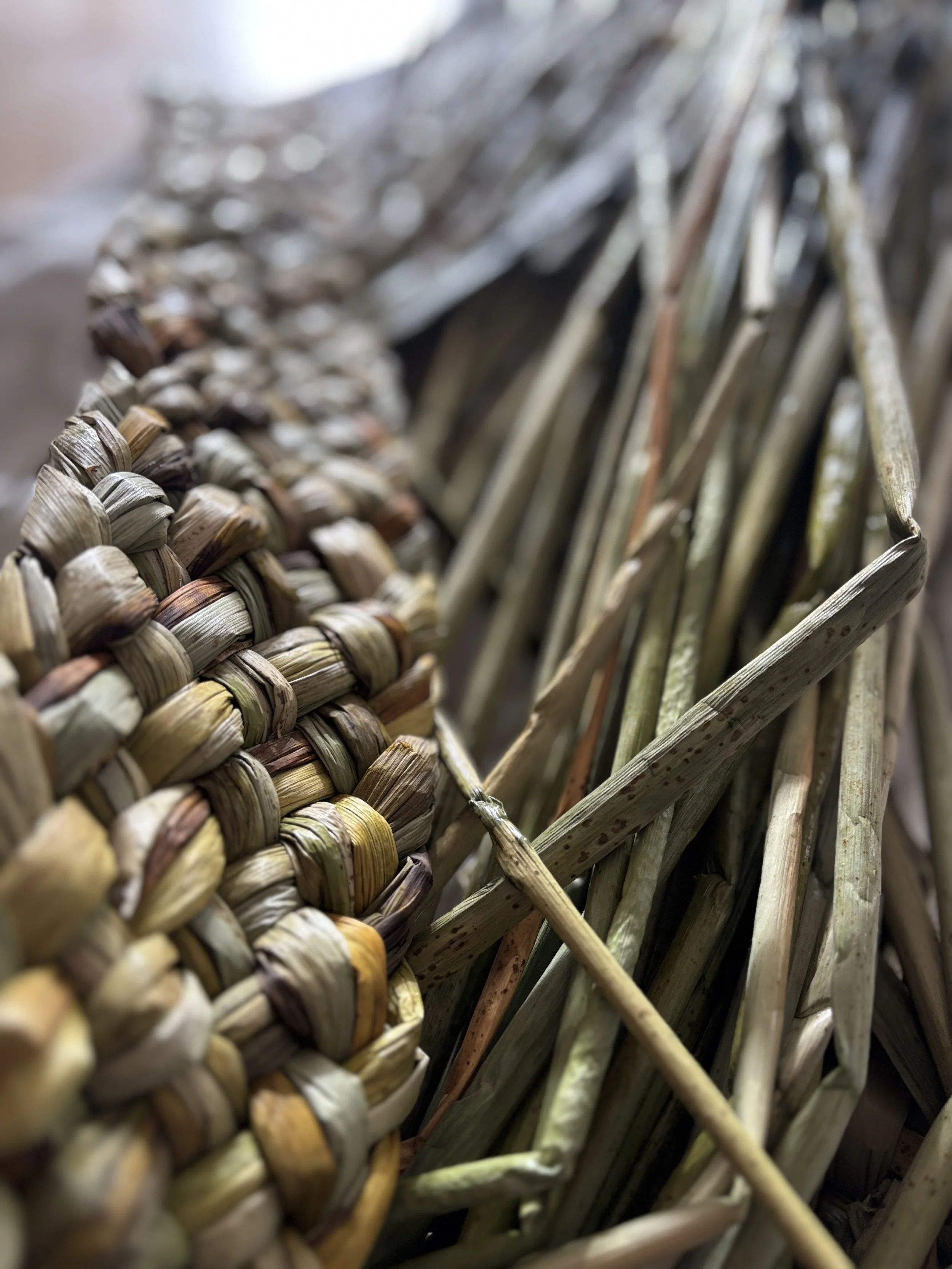
In this 8-hour course, artisan Fleur Emery-Rice will introduce you to freshwater rush: where it grows, how it is harvested and prepared, and how generations of makers have transformed this simple wetland plant into beautiful and useful objects. Today, both the material and the specialist knowledge required to work with it are increasingly rare.
Using rush brought from England especially for the course, you will learn to prepare and handle the material before mastering a traditional five-strand plait and using it to begin a small coiled piece.
Description
In this 8-hour course, artisan Fleur Emery-Rice will introduce you to freshwater rush: where it grows, how it is harvested and prepared, and how generations of makers have transformed this simple wetland plant into beautiful and useful objects. Today, both the material and the specialist knowledge required to work with it are increasingly rare.
Using rush brought from England especially for the course, you will learn how to select, prepare and handle the material before learning a traditional five-strand plait. Over two mornings, you will develop the rhythm and tension needed to make an even plait and discover how lengths of plait can be joined and shaped to create larger pieces.
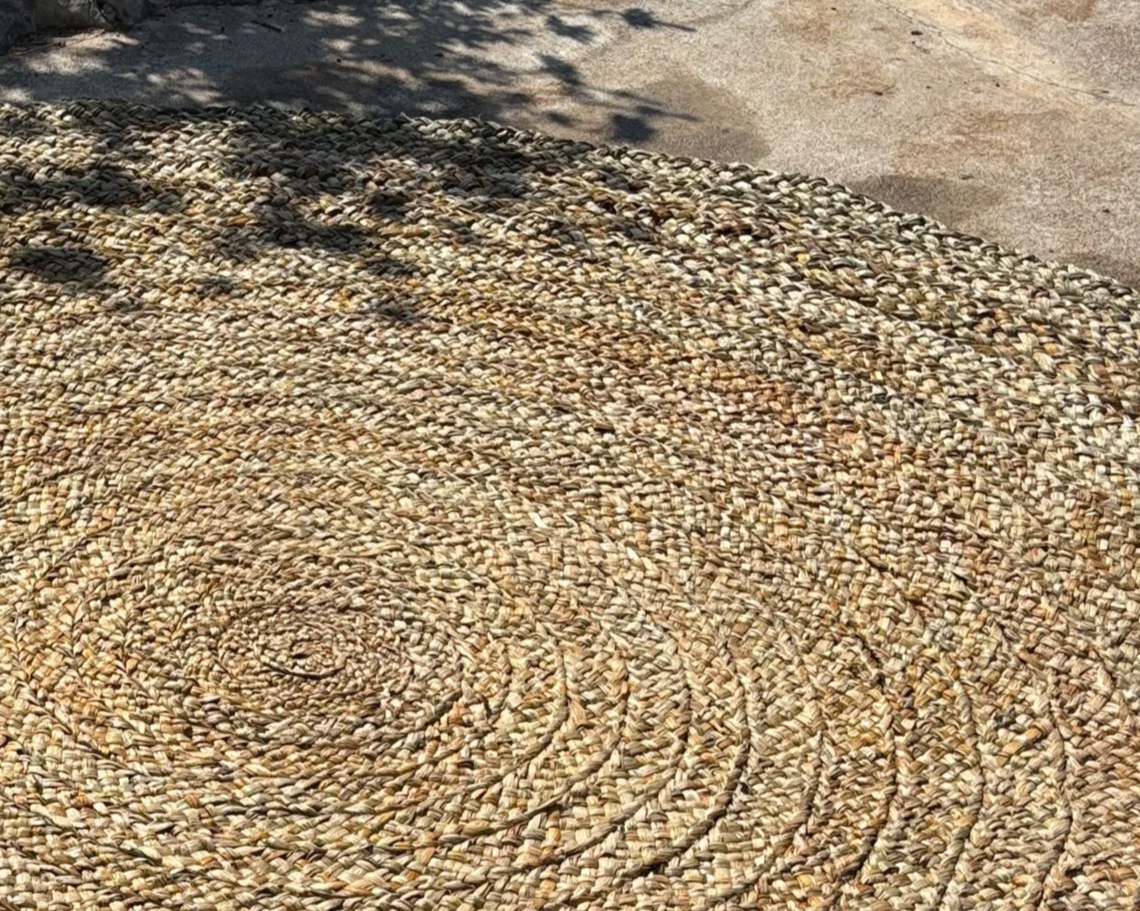
You will finish by using your plait to begin a small coiled spiral piece, learning the same fundamental construction technique used to make traditional English rush mats.
This course is taught in English with Spanish.
Content
Day 1
Introduction to the history and traditional uses of English rush, learn how it is harvested, dried, stored and prepared for weaving.
Begin handling and plaiting developing an understanding of tension and rhythm.
Day 2
Preparing rush and continuing the five-strand plait.
Learning how new rushes are introduced to create a continuous length of plait.
Introduction to constructing with plait: joining, coiling and shaping.
Beginning a small spiral piece using your own plait.
Duration: 8 hours, divided into two 4-hour sessions.
Level: Beginner. No previous experience is necessary.
Materials: English freshwater rush is provided.
02 / cordage: an ancient technology
Summary
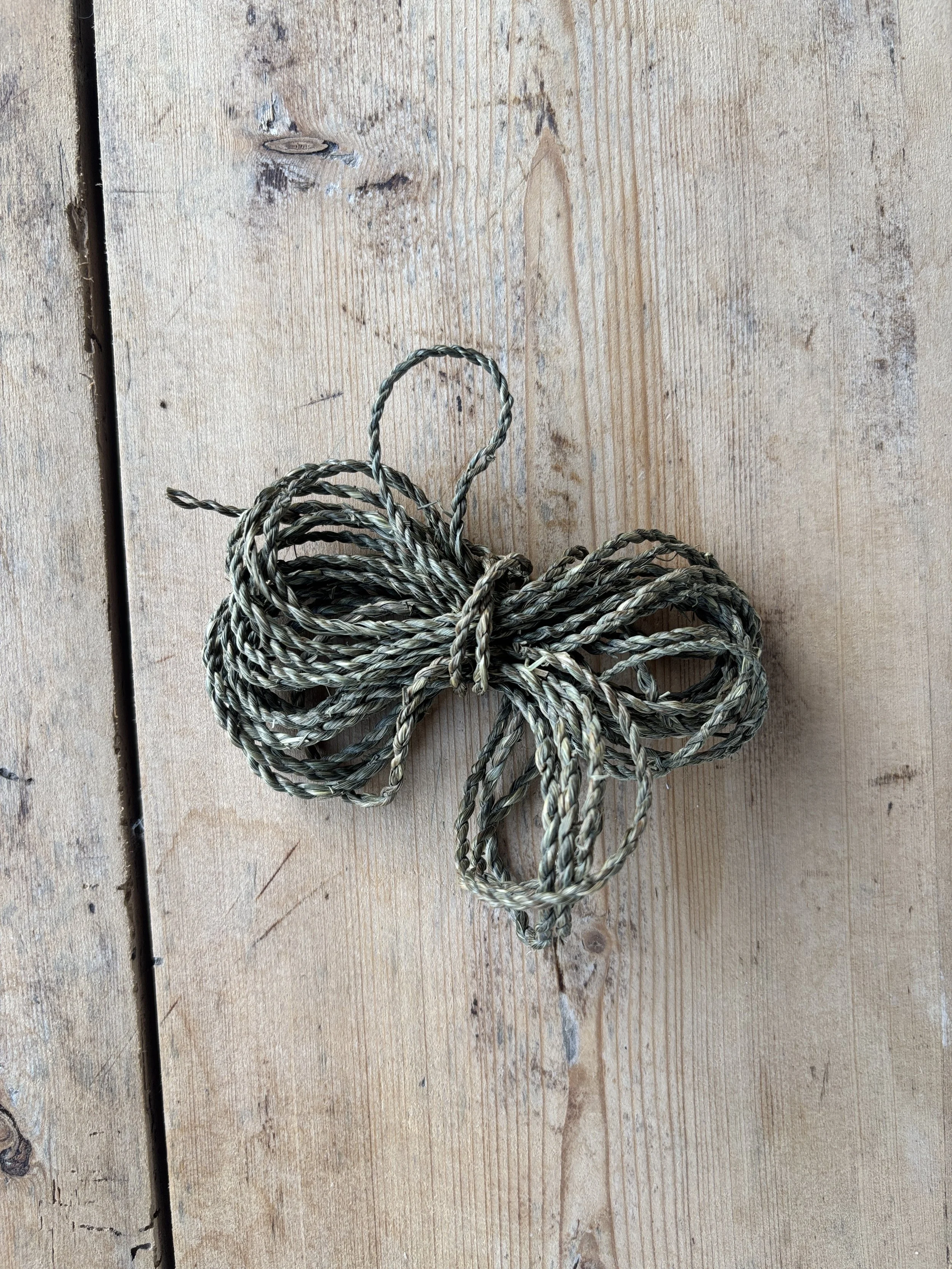
Discover one of humanity’s oldest technologies: transforming wild plant fibres into strong, useful cord using only your hands.
Long before manufactured string or rope, people learned to find fibre in the plants growing around them and twist it into cord for binding, carrying, building, fishing and making. Evidence of this ancient technology survives across Europe, where prehistoric plant-fibre cordage has been preserved for thousands of years.
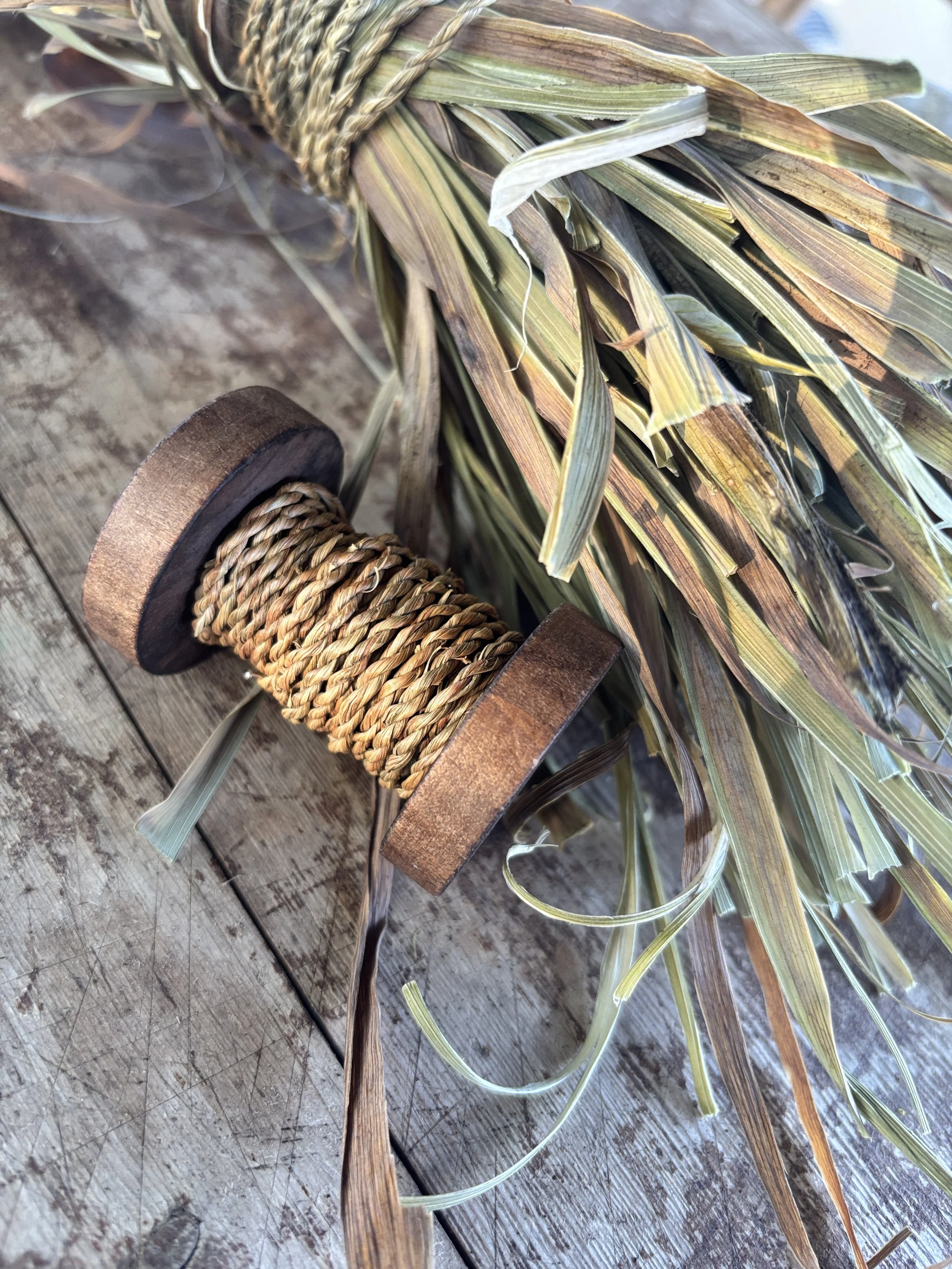
In this 8-hour course, Fleur Emery-Rice will introduce you to the journey from plant to cord: how to identify and gather useful fibres, prepare them for working, and use the simple but ancient technique of hand twisting to make continuous two-ply cordage.
Content
Day 1
Introduction to cordage, its history and traditional uses.
Finding, gathering and preparing plant fibres to work.
Introduction to making two-ply cord by hand.
Day 2
Developing rhythm and consistency in the two-ply twist.
Adding new fibres to create continuous lengths of cord.
Experimenting with different plants, textures and thicknesses.
Duration: 8 hours, divided into two 4-hour sessions.
Level: Beginner. No previous experience is necessary.
Materials: Plant fibres provided.
Description
Making cord from plant fibres is one of the oldest technologies we share.
In this course we will explore the plants that can provide workable fibres and how to find and gather them responsibly.
Working with a range of wild plant fibres, you will learn to make a continuous length of two-play cord, controlling thickness and tension.
Alongside making, we will look at the long history of this technology and explore the many things that become possible once we can make string: binding, carrying, building, fishing, nets, baskets, handles and tools.
By the end of the course you will have the knowledge and confidence to begin finding, preparing and experimenting with fibres.
This course is taught in English with Spanish.